3 common refusal mistakes in 189 / 190 / 491 applications
As of 2026-07-07 · Fidelity Editorial
Three common ways that over-claiming points in an EOI can lead to the refusal of a 189, 190 or 491 visa: regional study points, unacknowledged work experience, and adding a partner after an invitation, with the relevant law and policy.

Surfers Paradise, Gold Coast. Photo: Donaldytong / Wikimedia Commons, CC BY-SA 3.0
For the points-tested skilled visas (subclasses 189, 190 and 491), you are invited on the basis of the points you claim in your Expression of Interest (EOI). Those points are then checked again when your visa application is assessed. If you cannot substantiate the points you claimed, the visa may be refused, and if the problem comes to light after grant, the visa may be cancelled.
Over-claiming points in an EOI is one of the most common reasons for refusals and cancellations. Below are three situations we see often, each with the relevant legislation and Department of Home Affairs policy. The scenarios are simplified for illustration, and the names are fictional. This post is current as at 7 July 2026.
1. Claiming regional study points you are not entitled to
The scenario
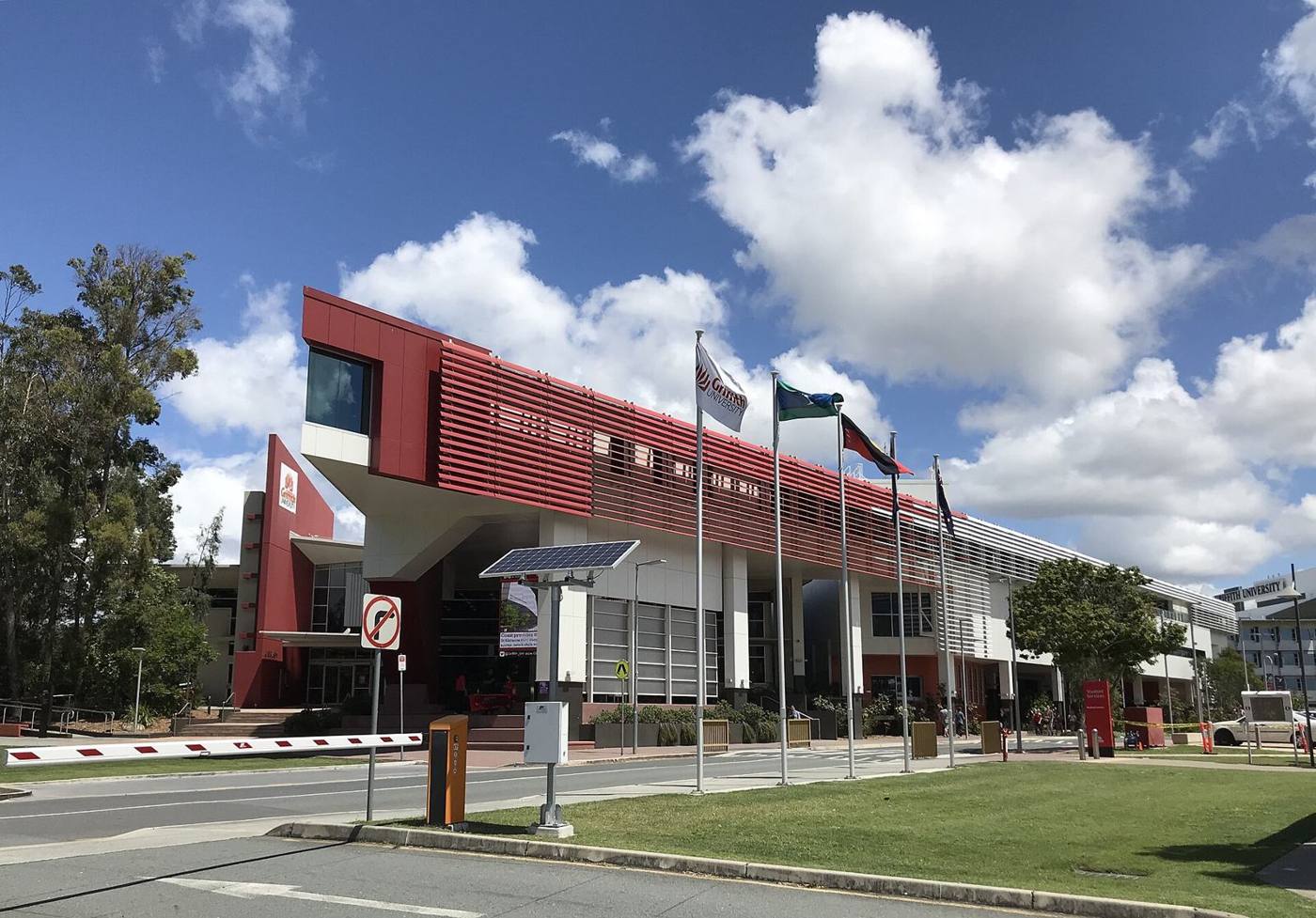
Griffith University library, Gold Coast campus. Photo: Chris Olszewski / Wikimedia Commons, CC BY-SA 4.0
Sam studied at Griffith University's Gold Coast campus, which is in a designated regional area, for the entire duration of their degree. In first year, Sam lived in Sunnybank, which is not a designated regional area, and commuted by train. In second year Sam moved to Surfers Paradise, which is in a designated regional area, and lived there until they graduated. Sam then claimed regional study points in their visa application.
Sam cannot claim those points. The campus was in a regional area, but Sam did not live in a designated regional area for the whole duration of their studies. The visa is likely to be refused.
The law and policy
Migration Regulations 1994 (Cth) Schedule 6, Part 6D.10, Item 6D101 sets out four requirements:
"(a) the applicant met the Australian study requirement; (b) the location of the campus or campuses at which that study was undertaken is in a designated regional area; (c) while the applicant undertook the course of study the applicant lived in a designated regional area; (d) none of the study undertaken constituted distance education."
The Department's policy ([Sch6D] Schedule 6D general points test for General Skilled Migration visas mentioned in subregulation 2.26AC(1), 16.1) explains which period the residence requirement covers:
"...this requirement relates to the whole course not just the period used to satisfy the Australian study requirement..."
The campus location in (b) and where you lived in (c) are separate requirements, and the residence requirement applies across the whole course. If you lived outside a designated regional area for any part of your course, you cannot claim these points.
2. Claiming work experience the skills assessment did not acknowledge
The scenario

A restaurant kitchen. Photo: Heather Cowper from Bristol, UK / Wikimedia Commons, CC BY 2.0
Melinda worked at a restaurant in Brazil for more than five years and says she was employed as a Chef. She later came to Australia, completed a Certificate IV in Kitchen Management and a Diploma of Hospitality Management, and received a positive skills assessment as a Chef. However, the skills assessing authority did not acknowledge the Brazilian experience as relevant skilled employment. Melinda claimed overseas work experience points for five years in Brazil.
It is not safe to claim those points, because the assessing authority did not recognise that experience as relevant skilled employment. Unless Melinda provides substantial evidence to support the claim, the visa is likely to be refused.
The policy
The policy ([Sch6D] 10.4.1) says:
"...When assessing periods of skilled employment for the purpose of awarding points, the following must be taken into account: the opinion of the relevant skills assessing authority on the period of skilled employment including the date on which they deemed the applicant skilled; and... If the skills assessing authority's opinion would result in the applicant being awarded less points than the applicant claimed in their EOI, then decision makers should consider the information in ANZSCO and apply the more beneficial outcome in determining when the applicant was working at a skilled level. While having regard to the opinion provided by skills assessing authorities, decision makers also need to be satisfied with the bona fides of the supporting documents presented in making their decision to award points..."
So claiming experience that is not in your outcome letter is not impossible in principle. A decision maker can look at ANZSCO and apply the more beneficial outcome. But they must also be satisfied that the supporting documents are genuine. Where the assessing authority has already declined to count the experience, the evidence needs to be strong enough to persuade the decision maker otherwise.
The safe approach is to claim work experience points only for periods the skills assessing authority has explicitly acknowledged as relevant in your outcome letter.
3. Adding a partner after being invited
The scenario
Priya claimed to be single in her EOI and was invited to apply for a subclass 189 visa as a single applicant. However, she had married before receiving the invitation, and did not update the EOI or notify the Department. Consider two scenarios:
Scenario 1: Priya declares the marriage only later, when trying to sponsor her husband for a subclass 820 partner visa.
Scenario 2: Priya includes her husband as a dependent in the 189 visa application.
Neither scenario is acceptable, and both can have very serious consequences for the applicant. If your relationship status changes, you must update your EOI before you are invited. If your relationship changed, you did not update your EOI and you are then invited, the safest course is to forfeit that invitation.
The policy
The policy ([Sch6D] 17.2 and 17.5) explains when relationship status is assessed and how inconsistent information is handled:
"... In assessing whether an applicant is single or has a spouse or a de facto partner; and ... The relevant time of the relationship status is the date of the points test assessment by the decision maker. This means that if the applicant's relationship status or the residence status of their partner changes after the date of invitation or the date of application, the award of partner points may also change ..."
"...In accordance with section 57 of the Act, inconsistent information regarding the marital/de facto relationship status of the applicant should be provided to the applicant for comment and if there has been a change in relationship status, evidence should be requested to support this change. This is to ensure applicants who are married or in a de facto relationship are not able to be awarded points under 6D112 on the basis of claiming to be without a spouse or de facto partner..."
Single points under 6D112 are for applicants without a spouse or de facto partner. If you were already married before you were invited, the single points claimed in your EOI did not reflect your actual relationship status, and policy 17.5 is aimed at preventing single points being awarded in that situation. Under the policy, where relationship information is inconsistent, it should be put to you for comment and evidence of any change should be requested.
If you did not update your relationship status in time and then try to include your partner in the visa application after the invitation, the application is likely to be refused. Even if a 189 visa is granted, it may be cancelled if the Department later finds that false or misleading information was provided.
Summary
Regional study points: the campus must be in a designated regional area and you must have lived in one for the whole course.
Work experience points: claim only periods your skills assessment outcome letter explicitly acknowledges. Claiming unacknowledged experience needs substantial evidence.
Relationship status: update your EOI before you are invited. If you were invited without updating it, forfeiting the invitation is the safest course.
In each case, the question is whether the points claimed in your EOI can be substantiated at the visa application stage. What looks like a minor point-claiming error can lead to refusal or cancellation, so it is worth checking each claim and its supporting documents before you lodge an EOI or respond to an invitation.


Sources
- Migration Regulations 1994 (Cth) Schedule 6, Part 6D.10, Item 6D101
- [Sch6D] Schedule 6D general points test for General Skilled Migration visas mentioned in subregulation 2.26AC(1), paragraphs 10.4.1, 16.1, 17.2, 17.5 (Department of Home Affairs policy)
- Migration Act 1958, section 57 (as cited in policy paragraph 17.5)
Fidelity Migration Services · Registered migration agent MARN 2619380 · Brisbane · Book a consultation