"I just need to find an employer, right?" — Work visa myths, part 1
As of 2026-07-26 · Fidelity Editorial
A subclass 482 work visa passes through three assessments, and the first two are about the employer, not you. What each stage examines, how caveats and the SAF levy work, and what sponsorship costs a business each year, as at July 2026.
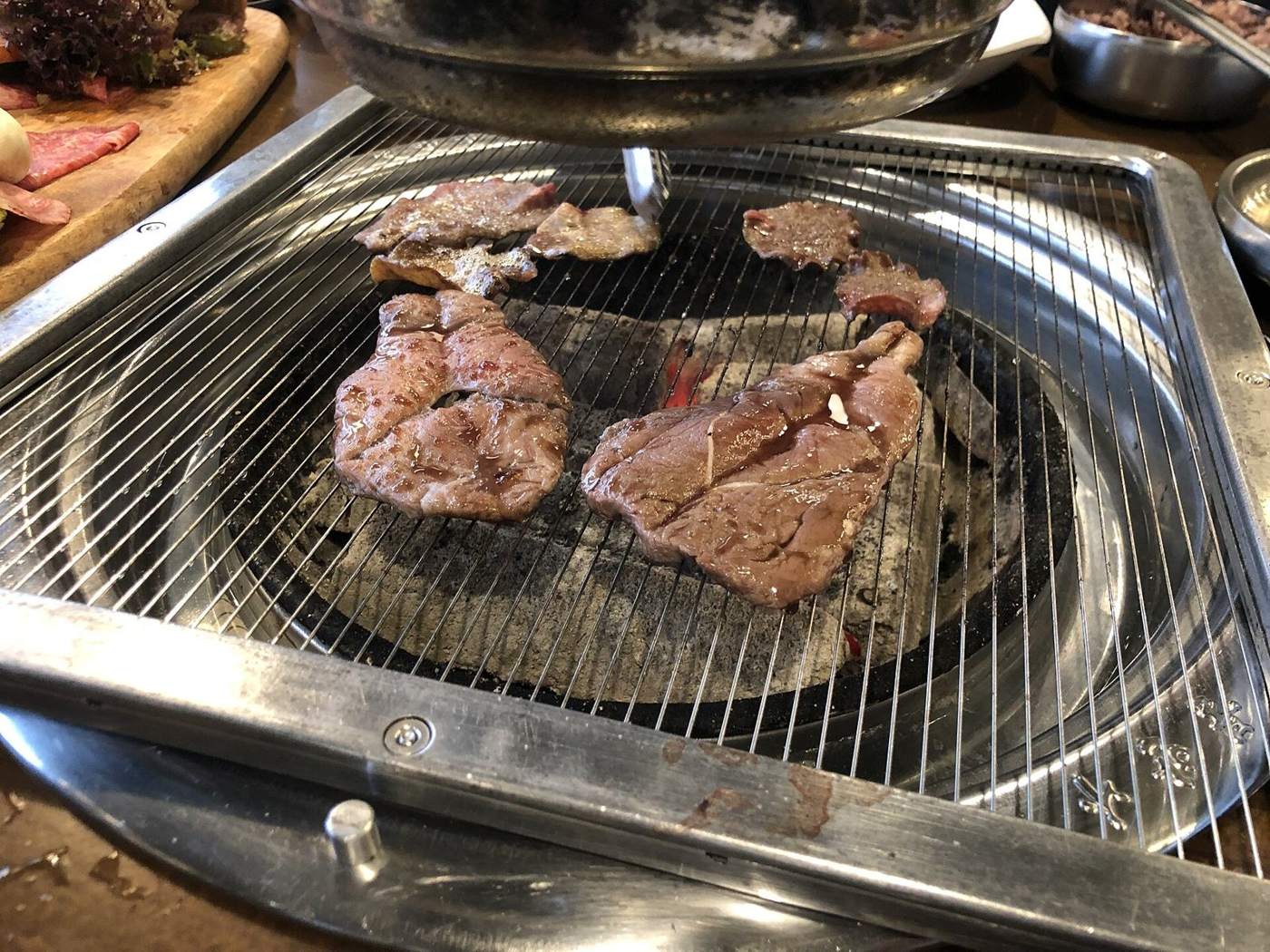
A Korean barbecue restaurant in Sydney. Photo: Joditran / Wikimedia Commons, CC BY-SA 4.0
“I just need to find an employer, right?” It is the most common assumption we hear about Australian work visas, and it gets the order of things backwards.
An Australian work visa (subclass 482) involves three rigorous assessments, and two of them are not about you at all. Unless the employer passes that scrutiny itself, it cannot sponsor you. This is Part 1 of a two-part series on common work visa myths, and it covers what the employer has to pass. Everything below is current as at July 2026.
The three stages at a glance
Stage | Who is assessed | What is looked at |
|---|---|---|
1 · Sponsorship | The business | Financial statements, company records, proof of active trading, capacity to afford another employee |
2 · Nomination | The position | Whether a local could fill it, whether it is genuine, salary threshold and market rate, caveats |
3 · Visa application | You | Qualifications, work history, licensing, English, health and police clearance |
Stage 1 · Sponsorship: the company is on trial.
The employer must first be approved as a standard business sponsor. To get there, it hands over financial statements, company records and proof of active trading to its migration agent or lawyer, and that material then goes to the Department.
This is sensitive business information that most companies would not normally share with outsiders. Alongside it, the Department also examines whether the business can genuinely afford another employee.
At this stage, the company is on trial, not you. However strong your CV is, nothing moves forward until the business clears this step.
Stage 2 · Nomination: where most refusals happen
This stage is on the employer too, and what is judged here is the position, not the person. The first question is whether the role genuinely cannot be filled by a local. After that, the Department asks:
Is it a genuine position the business actually needs?
Does it meet the salary threshold and the market rate?
Does it fall foul of a caveat on that occupation?
This is where most refusals happen. It is why, in practice, the position matters more than your CV: a well-qualified applicant can still be stopped here if the role itself does not hold up.
Caveats: on the list, but possibly still ineligible
Caveats are occupation-specific limits. An occupation can be listed on the CSOL and the particular position can still fail a caveat, in which case it cannot be nominated.
Hospitality is a good example. Chef and Cook carry caveats 3 and 4:
Caveat 3: work involving mass production in a factory setting.
Caveat 4: a role in a limited service restaurant.
The instrument defines a limited service restaurant as fast food and takeaway, fast casual, drinking establishments with limited food service, limited service cafes and limited service pizza restaurants.
A full-service restaurant isn't on that list. But the definition is open-ended, and restaurants can be refused nomination on exactly this ground. Without carefully prepared evidence, a caveat may end up being applied to a venue it was not meant to cover. What decides it is not the job title, or what the venue calls itself, but the workplace and the actual duties.
The SAF levy: payable at nomination
The Skilling Australians Fund (SAF) levy is what an employer pays to sponsor a foreign worker. The amount depends on the business’s annual turnover:
Turnover under $10m | Turnover $10m or more | |
|---|---|---|
482 (per year of the visa) | $1,200 | $1,800 |
PR (186), one-off | $3,000 | $5,000 |
For a 482, the levy is not paid annually. It is paid as a single lump sum at nomination, covering the whole visa period: up to $7,200 across a four-year visa.
Passing that cost on to the applicant is illegal. If an employer asks you to cover the levy, that request is itself a problem.
Stage 3 · Visa application: finally, you
Only now does the nominated person lodge their own visa application, and only now are you assessed. The Department looks at:
Qualifications relevant to the role
Work history meeting the minimum years
Licensing or registration where required
On top of that come the English test, health check and police clearance. Stages 1 and 2 can both pass and a single document here can still undo it. Because the employer has already invested time and money by this point, the applicant’s side of the paperwork deserves the same care.
What it costs the employer
For the employer, sponsorship is slow and expensive. As at July 2026, the minimum yearly cost looks like this:
Item | Amount |
|---|---|
Minimum salary threshold (CSIT) | AUD 79,423 |
Superannuation 12% (per year) | + AUD 9,531 |
SAF levy (per year) | + AUD 1,200 – 1,800 |
Minimum yearly cost | ~ AUD 90,000 |
Migration agent or lawyer fees and lodgement costs sit on top of that, which puts an employer’s year-one outlay above AUD 90,000.
Employers who have not sponsored before may think twice once they learn the time, cost and paperwork involved. So the better question isn’t “will someone hire me?” It’s “am I worth that time and cost to a business that has other options?”
Summary
A subclass 482 visa moves through three stages: sponsorship, nomination and the visa application. The first two assess the employer, not you.
Nomination judges the position, not the person. An occupation on the CSOL can still fail a caveat, and the test is the workplace and actual duties, not the job title.
The SAF levy is paid as a lump sum at nomination for the whole visa period, and passing it on to the applicant is illegal.
As at July 2026, an employer’s minimum yearly cost is around AUD 90,000 before professional fees and lodgement costs.
Part 2 covers the remaining three myths: will my overseas degree count, is a work visa really the fast track to PR, and am I the exception. Read Part 2.
General information only, not advice about your individual circumstances. Current as at July 2026.


Fidelity Migration Services · Registered migration agent MARN 2619380 · Brisbane · Book a consultation